
Dartford sits at one of the most varied junctions in Kent — a town with a genuine industrial and commercial heritage, a housing stock that spans from pre-war terraces to large-scale Thames Gateway new builds, and a position at the edge of the commuter belt that gives it a property market quite different from the rural Kent towns further south and east.
We are Dartford Building Services, a local building team covering Dartford and the surrounding north Kent area. We carry out house extensions, loft conversions, home renovations, kitchen and bathroom refits, garden rooms and general building work — managing each project from first visit to handover.
Dartford’s housing creates a consistent and varied flow of building work. The Victorian and Edwardian terraces around the town centre and the historic Hythe Street and Market Street areas. The inter-war semis across Wilmington, Sutton-at-Hone and Stone. The post-war estates of Bean, Darenth and Hawley. The Thames Gateway developments of Greenhithe, Ebbsfleet and Swanscombe that sit alongside older housing in ways that create a patchwork of different construction eras. And the more rural village properties of Fawkham, Hartley, Longfield and the surrounding North Downs parishes.
We know this area and its housing. Get in touch to discuss your project.
The older housing closest to Dartford town centre — the Victorian and Edwardian terraces and semis in the streets around the station, along Highfield Road and the older residential areas near the town’s historic core — has specific characteristics that building work needs to address. Solid brick construction, lime mortar pointing, original timber frames and period detailing require a different approach to the post-war housing further out. Extensions on these properties often involve party wall agreements, and the proximity of boundaries in the tighter town centre streets means careful design is needed to meet permitted development requirements. Planning constraints in the town conservation area apply to some streets.
The inter-war and post-war housing across Wilmington, Sutton-at-Hone, Stone and the surrounding villages represents the most consistently active area for extension and renovation work across the Dartford district. Three and four-bedroom semis and detached properties where open-plan ground floor conversions and rear extensions are the most frequently requested projects. The chalk and clay subsoil underlying much of this belt — the North Downs dip slope draining toward the Thames — can affect foundation depth on extension projects, particularly in garden areas where ground conditions have not been assessed previously. We confirm ground conditions at the survey stage on every extension project in this area.
The post-war estates and the villages immediately south of Dartford — Bean, Darenth, Hawley and the surrounding settlements — sit on the North Downs chalk that gives way to clay in the lower-lying areas toward the Thames. Properties here are predominantly two and three-bedroom post-war semis and detached houses with roof forms that typically suit dormer loft conversions well, though the prevalence of trussed rafter construction on properties built from the mid-1960s onward means the roof structure needs to be assessed before any loft conversion quote is confirmed. Extensions and ground floor reconfigurations are consistently popular across this area. Garden room demand has grown significantly as more households use these properties as a base for regular home working.
The Swanley area — Swanley itself, Hextable, Crockenhill and the fringe of the London Borough of Bromley — has a housing stock dominated by post-war and 1970s and 1980s residential development, with a smaller number of older properties in Swanley village and the surrounding lanes. Properties across this area are generally larger than equivalent post-war stock in the town itself, with larger gardens that accommodate rear extensions and garden rooms more comfortably. Loft conversion demand is strong across the Swanley corridor — the roof pitches and volumes on the 1970s detached and semi-detached stock typically convert well with a rear dormer. Planning is handled by Sevenoaks District Council for much of this area rather than Dartford Borough Council — we confirm the relevant authority and planning position at the first visit.
We cover Dartford and the surrounding north Kent and outer south-east London area. Here is a breakdown of where we work:
Dartford town and inner area
The DA1 and DA2 postcode areas — the town centre streets, Dartford station area, Crayford, Slade Green and the established residential streets running south from the town. Victorian and Edwardian terraces, inter-war semis and infill post-war development.
Swanley and surrounds
Swanley, Hextable, Crockenhill and the Bromley fringe. Post-war and 1970s to 1980s residential stock with larger plots. Planning through Sevenoaks District Council for much of this area.
South Dartford villages
Bean, Darenth, Sutton-at-Hone, Wilmington, Hawley, Stone and the North Downs villages. Post-war and inter-war housing on chalk and clay subsoil.
Thames Gateway corridor
Greenhithe, Swanscombe, Ebbsfleet and the newer residential developments along the Thames. Mixed construction eras from 1990s through to current new build.
Gravesend fringe
Longfield, New Barn, Meopham, Cobham and the villages approaching the Gravesham boundary.
Single storey rear, double storey and wrap-around extensions managed from structural design and planning through to handover. Most single storey extensions on Dartford’s semi-detached and detached housing fall within permitted development. For properties in Dartford Borough Council’s conservation area designations or in the Swanley corridor where Sevenoaks District Council is the authority, we confirm the planning position before any design is committed to. Ground conditions on the chalk and clay mix of the North Downs dip slope are assessed at the survey stage — not assumed to be standard depth.
Dormer, rooflight and hip-to-gable conversions across Dartford and the surrounding north Kent area. En-suite designed and plumbed at the structural stage. Trussed rafter roofs on the post-war housing of Bean, Darenth and Sutton-at-Hone require full structural replacement rather than adaptation — we confirm the roof type at the survey stage. Building regulations managed at every inspection stage. Party wall notices served on terraced and semi-detached properties from the outset — not identified as a problem at the last minute.
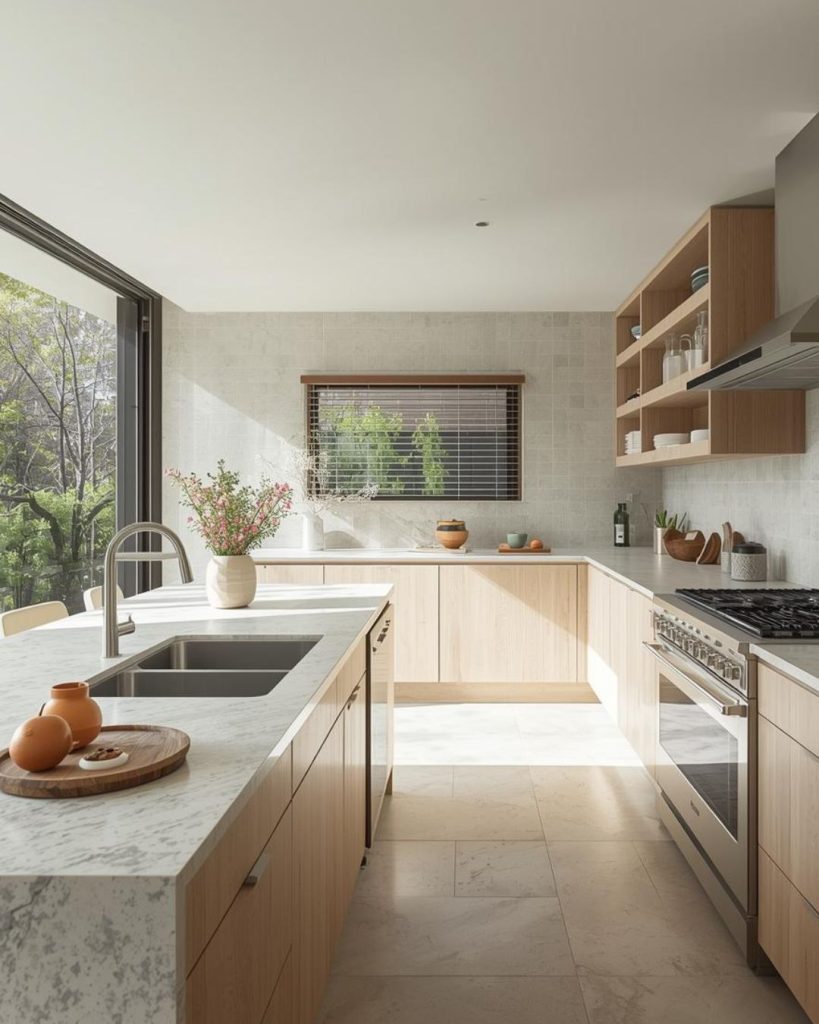
Kitchen renovations managed as a complete project — structural alteration, first fix plumbing and electrics, fitting, tiling and finishing in the right sequence. Bathroom renovations managed from strip-out through to sanitaryware — waterproofing correct, substrate properly prepared, waste gradients right before any tile goes on. Both scopes managed together where both are planned at the same time, combining first fix disruption into a single programme. For higher-specification projects in the larger properties of the Swanley corridor and the Gravesend fringe, we bring the experience to manage the finish those properties require.
Tell us what you are planning and we will come out to look at the property — honest advice and a clear price, no obligation.